Regaining Control: Why an ESA is a Scientifically Sound Step Forward
You already know something is off. Anxiety makes leaving the house feel impossible. Depression turns getting out of bed into a negotiation. Panic attacks arrive without warning, leaving you completely hollowed out.
Reaching out for help is one of the bravest things you can do. Registering your dog as an Emotional Support Animal (ESA) and talking with a therapist for an evaluation can be the first step in regaining control of your mental health.
Needing an ESA is not a crutch. ESAs are scientifically credible and biologically sound ways of helping yourself emotionally and mentally. Your act of reaching out and seeking support is not a sign of weakness. It is your brain asking for what it truly needs to heal.
Here's what science tells us about the changes in the brain when you make an ESA part of your life.
Your Brain on ESAs: The Chemical Shift
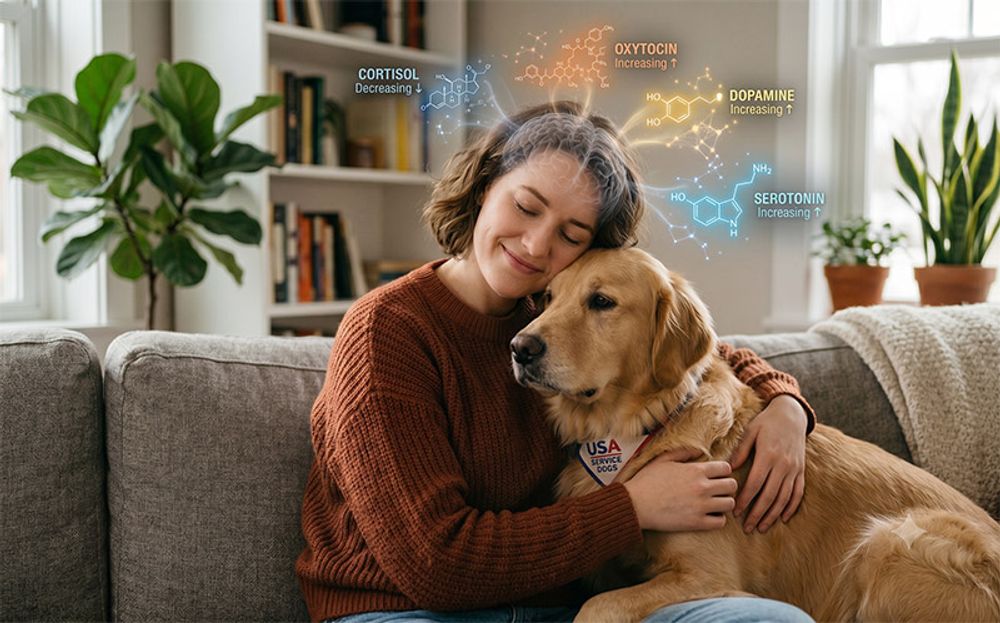
When you interact with your Emotional Support Animal, your brain goes through real, measurable chemical changes. Here is what is happening beneath the surface:
-
Cortisol (The Stress Hormone): Often stuck at high levels when you have anxiety, cortisol keeps your body trapped in "fight-or-flight" mode. Petting an animal for just 10 minutes significantly lowers cortisol levels, allowing your nervous system to finally relax.
-
Oxytocin (The Bonding Hormone): Just three minutes of physical contact with a dog boosts your oxytocin, promoting feelings of safety, warmth, and connection. Oxytocin and cortisol have an inverse relationship—as your oxytocin rises, your stress levels fall.
-
Dopamine (The Reward Chemical): Depression drains dopamine, making even small daily tasks feel impossible. The routine of caring for an ESA stimulates dopamine production by giving you a consistent sense of purpose and accomplishment.
-
Serotonin (The Mood Stabilizer): Interacting with your pet helps replenish serotonin levels, which are often heavily depleted during chronic low moods. This boost helps you feel more balanced, motivated, and present.
The Chemistry of Calm: How ESAs Lower Cortisol
When you struggle with anxiety daily, your brain and body are caught in a vicious cycle. Cortisol is a hormone produced by the brain in response to perceived danger.
People suffering from anxiety have high cortisol levels in their bodies for a long time, even after the source of stress has disappeared. The body is in a continual state of preparing for 'fight-or-flight': muscles are tense, the sleep pattern is disrupted, and the brain is not stopping the worst-case scenarios.
Physical contact with an animal such as a dog is fact an excellent method of breaking that cycle.
In a random experiment at Washington State University, it was demonstrated that students who spent only 10 minutes stroking cats and dogs had notably lower cortisol levels in saliva than students who observed the animals only or looked at their photos. "Ten minutes alone can really make a difference," said the main investigator, Patricia Pendry.
Also, such interaction causes your brain to produce oxytocin, a hormone that plays a role in social bonding and feelings of safety and warmth that come with the presence and closeness of others. A study has shown that a substantial increase in oxytocin levels can occur within only three minutes of physical contact with a dog. Oxytocin and cortisol have an opposite relationship. As one rises, the other falls. Your ESA is not just comforting you emotionally. It is changing your brain chemistry in real time.
Grounding Through the Storm: ESAs and Panic Attacks
In the case of a panic attack, your brain's amygdala comes into the picture. This is the region responsible for detecting danger, and when it fires, rational thought goes offline. Your heartbeat speeds up; breathing becomes shallow, and your body behaves as though the threat is real even when it is not.
The only thing that can bring you out is sensory grounding, that is, a physical and present thing your nervous system can relate to.
This is exactly the kind of thing an ESA would be doing for you. Touching the animal, hearing its heartbeat, or simply feeling its body can provide the distraction that guides your brain away from the internal turmoil of a panic attack and back to the present moment. The brain can't attend fully to two opposing stimuli simultaneously. The physical presence of the animal wins your brain's focus.
There is a more intentional method you can learn about. It is Deep Pressure Therapy (DPT). When your dog lies across your lap or presses its body onto your chest, that pressure triggers your parasympathetic nervous system, the one that controls your sense of rest and recovery.
During distressing panic or dissociative episodes, DPT serves as a grounding technique to calm the mind through continuous physical contact. Big dogs have it down to an instinct. Even a tiny pup napping in your lap brings a similar tranquilizing effect.
The Power of Purpose: How ESAs Fight Depression
Depression is not just sadness. It is the erosion of motivation, the shrinking of your world, and the disappearance of routines that once kept you functional. It thrives on isolation and feeds on inactivity, partly because chronic low mood depletes dopamine and serotonin, the neurotransmitters that make effort feel worthwhile.
An ESA dismantles that cycle in a simple way: your dog does not know you are depressed.
After all, it still needs to be fed. It still needs to be taken for a walk. The underlying mechanism behind this concept is what psychologists call “Behavioral Activation,” which means that your actions stimulate your motivation rather than your feelings causing them.
You don’t wait till you feel like it. You get up because something needs you, and then the mood follows. Studies have shown that participating in the daily care activities of an ESA gives the owners a sense of purpose and keeps them functioning, even through their worst times of depression.
Making It Official: Protecting Your Peace of Mind
Your dog is already doing the heavy lifting. The neuroscience we’ve talked about isn't just a theory; it’s happening in real-time whenever you reach for your pet during a difficult moment.
But this is where many people stall. You might hesitate to formalize your ESA's status, wondering if the documentation is truly necessary or simply feeling overwhelmed by the process.
Having an official ESA documentation matters—not because it makes your bond more real, but because it provides legal protection for your animal in your home. Worrying about pet fees, breed restrictions, or unaccommodating landlords brings its own unnecessary anxiety. Removing that stress is a crucial part of your healing process.
The legitimate way to protect your housing rights is through an official letter issued by a licensed mental health professional. If you are ready to take that step, we can help connect you with a professional to evaluate your needs and secure your ESA Housing Letter. It's about giving yourself the peace of mind to focus on what actually matters: your well-being.