Can your Service or Emotional Support Dog come with you to work? The answer may be yes, but the path to approval requires preparation – both in knowing the laws governing service animals and how to properly request an accommodation.
The Americans with Disabilities Act (ADA) creates a clear pathway for both Service Dogs (SDs) and Emotional Support Dogs (ESDs) in the workplace. The key is knowing how the law works, as well as how to go about getting approved properly.
Let’s look at how to gain a proper service dog workplace accommodation for you and your dog – and what steps to follow to make the process easier.
Support Dog Laws: ADA Title I vs. ADA Title III
Most people are familiar with ADA Title III. This is a public access law that covers places such as restaurants, hotels, stores, and other public places.
Under Title III, only task-trained Service Dogs have protected access rights. Emotional Support Dogs (no matter how essential to an owner’s wellbeing) qualify under Title III.
However, Title III doesn’t cover or govern employers. That’s ADA Title I. Under Title I, any employer with 15 or more employees is required to provide what’s known as a “reasonable accommodation” to qualified employees with disabilities.
The definition of “reasonable accommodation” is broad enough to cover both Service Dogs and Emotional Support Dogs, depending on how the animal addresses an employee’s needs.
What’s the Difference Between Service Dogs vs. Emotional Support Dogs?
Many use these two terms interchangeably, but they aren’t the same!
Service Dog: A Service Dog has been specifically trained to perform specific tasks related to an individual’s disability. This could include alerting others to a medical episode (such as a seizure) or assisting with moving or retrieving items.
Emotional Support Dog: An Emotional Support Dog offers comfort and symptom relief through their presence. They can help reduce anxiety, ground someone during a dissociative episode, or help reduce the weight of depression. However, they don’t typically have specific task training.
In a workplace context, this distinction matters somewhat, but not always. The key is whether or not the dog helps an employee perform the key functions of their job, or if they are there for emotional support only.
How to Request Your Accommodation
You can’t simply show up to work with your dog and expect automatic approval. The ADA requires a formal process (referred to as the “interactive process”) that begins when you make a written accommodation request. Here’s what to expect along the way:
1. Gather Your Medical Documentation
Your employer is legally permitted to request documentation for a workplace accommodation. You’ll want a letter from a licensed healthcare provider that confirms your disability diagnosis and explains how your dog helps reduce symptoms or aids in job performance.
2. Submit a Written Request to HR or Management
You’ll want to approach either Human Resources or a direct manager in writing. A professional email or letter is usually enough to request an accommodation under ADA.
3. Demonstrate Your Dog’s Readiness
Employers want to ensure that a Service Dog or Emotional Support Dog isn’t an interruption in the workplace. Come with evidence of training or preparation: documentation such as a Canine Good Citizen (CGC) certification or other training logs can go a long way in helping employers feel confident in allowing a dog on the premises.
What are Employer Rights and “Undue Hardship”?
Remember, the accommodation process is a two-way street. Just as employers must engage in good faith, they are not required to approve every request.
For instance, an accommodation may be denied if it creates an “undue hardship,” though that bar is set intentionally high and must be grounded in specific, recorded evidence.
Some legitimate grounds for restriction could include safety-sensitive environments (think operating rooms, clean rooms, floors with heavy machinery) where a dog’s presence could create a hazard to the room and the dog itself.
Behavioral issues (persistent barking, aggression, lack of potty training) can also be grounds to revoke an accommodation. This makes training even more important before seeking an accommodation.
There are also coworkers to consider. According to EEOC guidance, a coworker’s mild allergy to dogs or general discomfort with animals isn’t sufficient on its own to deny accommodation.
Employers are required to try and accommodate employees as best they can – and if there are alternatives to help (such as workspace separation or air purifiers) they should be sought out before denying accommodation.
Tips for a Smooth Transition to an Office Dog
Approval is an important step – but it’s only the first in creating a supportive and successful office environment for you and your dog. Here are a few more tips that can help you in the transition process:
1. Propose a Trial Period
Many find that a 2-4 week trial window helps smooth out the transition. This time allows your employer to see firsthand that the dog is a calm presence in the office and can make the initial approval conversation easier.
2. Set Clear Expectations with Coworkers
Naturally, others may be curious (or even unsure) about a service or emotional support dog being in the office. You can help here by politely explaining why your dog is there and how others should interact with it.
Set clear guidelines – such as never attempting to pet or offer food without express permission. The clearer the expectations, the easier the transition!
3. Plan for the Full Workday
Remember, your emotional or service dog is also on the job all day! Coordinate designated times and places for potty breaks, and make sure to keep a water bowl and soft mat or bed under your desk. Set these in advance to avoid any unexpected emergencies.
4. Use the Right Gear
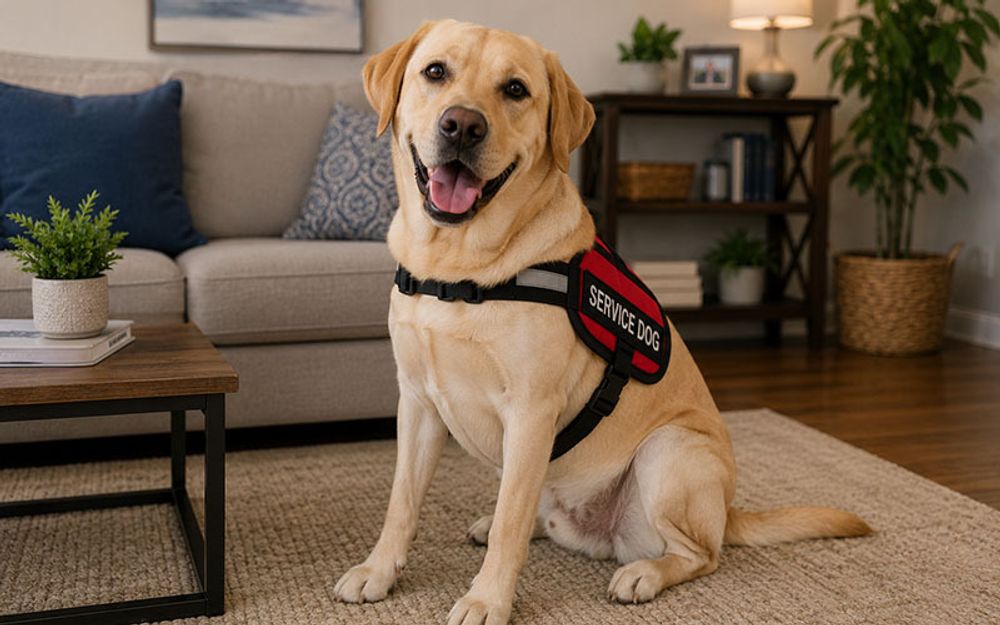
A service or emotional support dog should have the proper gear to distinguish their presence and role in the office. A professional vest and leash can signal to others in the office that your dog is working, and reinforce the working relationship in a busy office.
If you’re in need of proper gear, USA Service Dogs carries a full line of professional working gear designed for service and support dogs across different professional settings.
You Can Advocate for Yourself (and Your Dog!)
It’s important to know that requesting a workplace accommodation is exercising a protected right. You aren’t overstepping, because the law exists to ensure that employees with disabilities can perform at their best – with the support they need.
To help ensure the process goes smoothly, educate yourself and your workplace about what the law says and how to keep everyone on the same page. Make sure to prepare the proper documentation for your unique situation, and take the necessary steps to ensure your dog is ready for an office environment.
Want to learn more about service dog rights, working-dog gear, and other insights about life with a service or emotional support dog? At USA Service Dogs, we’re here to help you every step of the way.
From guiding you through the accommodation process to giving you and your dog the best head start, we offer the gear and resources you need to live a full and thriving life with a support dog.